
Animal behavior
Pair bonds, behavior and biology
Prairie voles help researchers examine how brain chemistry, surroundings and social experience influence pair bonding.
Read the explainerInvestigate how organisms behave, adapt and evolve. This collection connects the mechanics of flight and color with animal cognition, biodiversity and life’s deep history.
Archive selections are presented as durable scientific context. Consult current specialist literature where conclusions depend on newer evidence.

Animal behavior, biomechanics, ecology and evolution—organized around the questions that make biological research understandable.
Prairie voles help researchers examine how brain chemistry, surroundings and social experience influence pair bonding.
Read the explainer
A word-learning dog offers a way to consider memory, categorization and rapid association beyond humans.
Read the explainer
Fast wingbeats and equally fast sensory feedback show how tiny insects stabilize themselves in the air.
Read the explainer
For copepods near the surface, body size helps determine whether a leap can overcome surface tension.
Read the explainer
Taxonomic fieldwork reveals how tropical mountain species can originate in nearby lowlands or arrive from distant regions.
Read the explainer
Australian dragon lizards illustrate how chromosomes and incubation temperature can interact during development.
Read the explainer
Movement records help explain how individual preferences combine into a troop’s shared direction.
Read the explainer
A selection of unusual organisms shows why classification and field discovery remain central to biology.
Read the explainer
Organisms found in deep sediment prompted questions about the ancient lineage shared by complex life.
Read the explainer
Rapid chemical pulses inside a specialized chamber produce the beetle’s precisely directed defensive spray.
Read the explainer
Earlier seasonal events can alter the timing relationships among flowering plants, birds and other organisms.
Read the explainer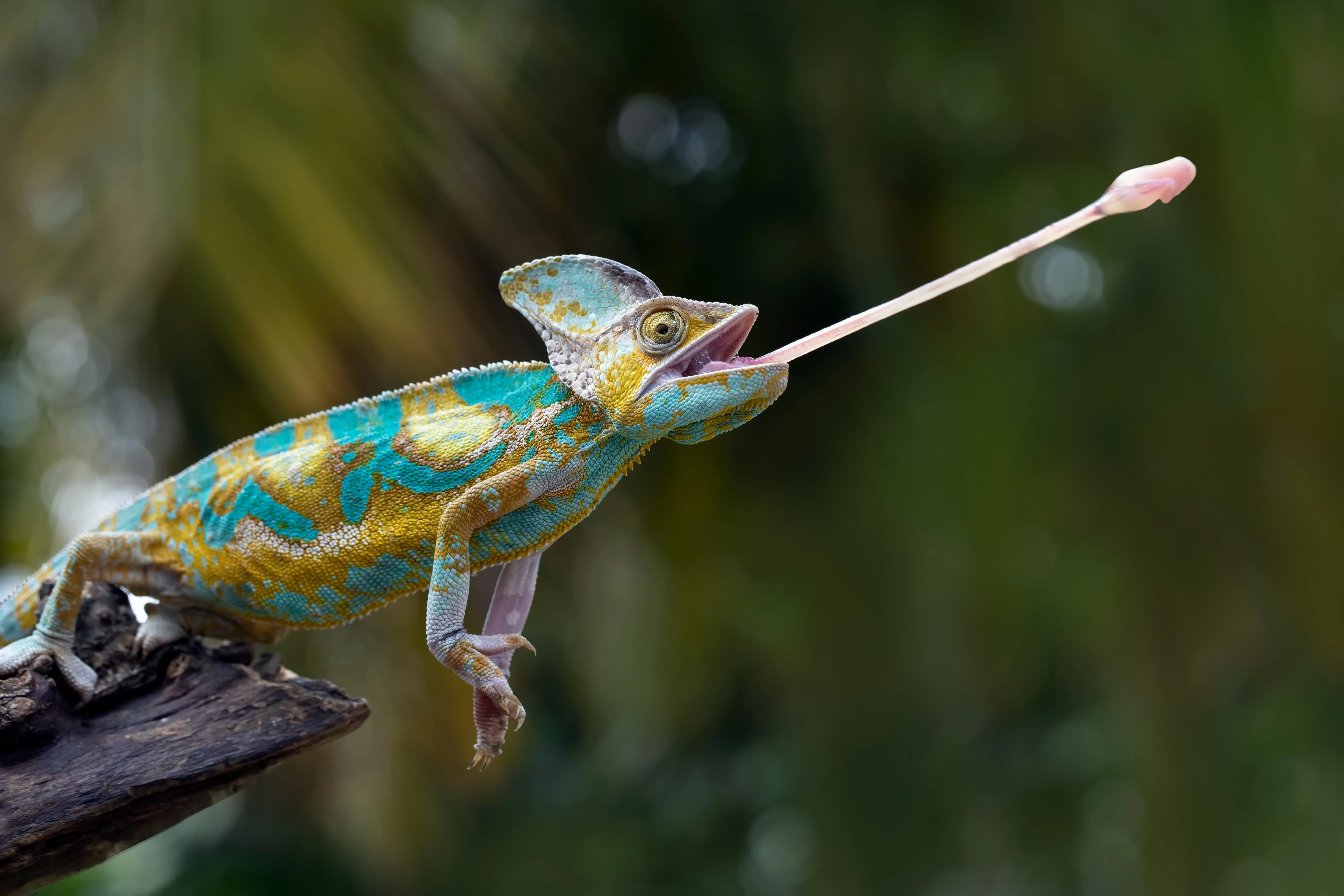
Ordered structures in skin cells help panther chameleons change visible color and manage reflected heat.
Read the explainer
Fossil teeth from Kenya add evidence to the evolutionary relationship among hippos and cetaceans.
Read the explainer
Experiments with chicks explore whether spatial ordering of quantity has roots beyond human language and culture.
Read the explainer
Bar-headed geese follow mountain terrain in a flight strategy that balances distance, altitude and energy use.
Read the explainerBiology changes as observations accumulate. These explainers are most useful when read for mechanisms, research questions and historical context.
Notice whether a story concerns molecules, organisms, populations or entire ecosystems.
Ask what physical, chemical or behavioral process links the observations to the explanation.
Distinguish measured results from broader interpretations and questions still being investigated.
The collection includes animal behavior, cognition, biomechanics, evolution, ecology, development, taxonomy and adaptation.
No. They are archive explainers that provide foundational and historical context. Check current specialist literature when recent findings matter.
Distinctive organisms often make a biological mechanism easier to observe, from high-altitude flight to rapid color change or chemical defense.
Yes. They can support inquiry and discussion, while the dedicated teaching section provides curriculum connections and classroom activities.
Use the older-stories link at the end of the article grid to continue to the next archive page.
Email info@whyfiles.en-html.org or visit the contact page.